Visiting the Celtic countries is always a sobering experience for an English woman interested in history. The long and bloody past of the Irish has always hung heavy on me. I came to understand quite clearly, with the instinct that a teenager has for bull-shit, the meaning of the word propaganda. I knew I was only getting one side of the troubles that raged just across the Irish Sea, but no-one in school taught me about the history that had created them. That I had to find out for myself.
Now I have travelled to another country with a chequered history of dispute with the English: Scotland. At least geography and perhaps a wild ferocity was on their side. Even the Romans feared to tread and built a wall beyond which, as my Scottish friend commented, dragons be.
Stirling Castle is the northern point of a triangle made with Edinburgh and Glasgow. It sits on a rocky promontory above the plain through which the River Forth meanders. Seen from the motorway its craggy heights scream defensive position and indeed, it was fought over no less that thirteen times in its history. Take Stirling and you take Scotland.
Now it is regularly taken by a host of unarmed (except for ice-creams) visitors who mingle with ladies and gentlemen dressed in period costumes composed of cheap synthetics and no petticoats. (No, I didn’t say fur coats and no knickers.) Indeed my friend and I had an in-depth conversation with Bishop David (long pause whilst the name continues to elude me) regarding the intrigue at the Stewart court.

Out in the Queen Ann Garden, a man displays his birds of prey. They sit on their perches regarding us with the steady watchfulness of accomplished hunters. Yes, he says to a little girl, you can stroke the birds, but in return the cute little falcon will demand payment of a lump of your flesh. She doesn’t quite understand and her face takes on the confusion and wariness of the hunted. He continues to expound enthusiastically upon the nature of of his beasts, pecking out his sentences with a ferocity that almost draws blood.
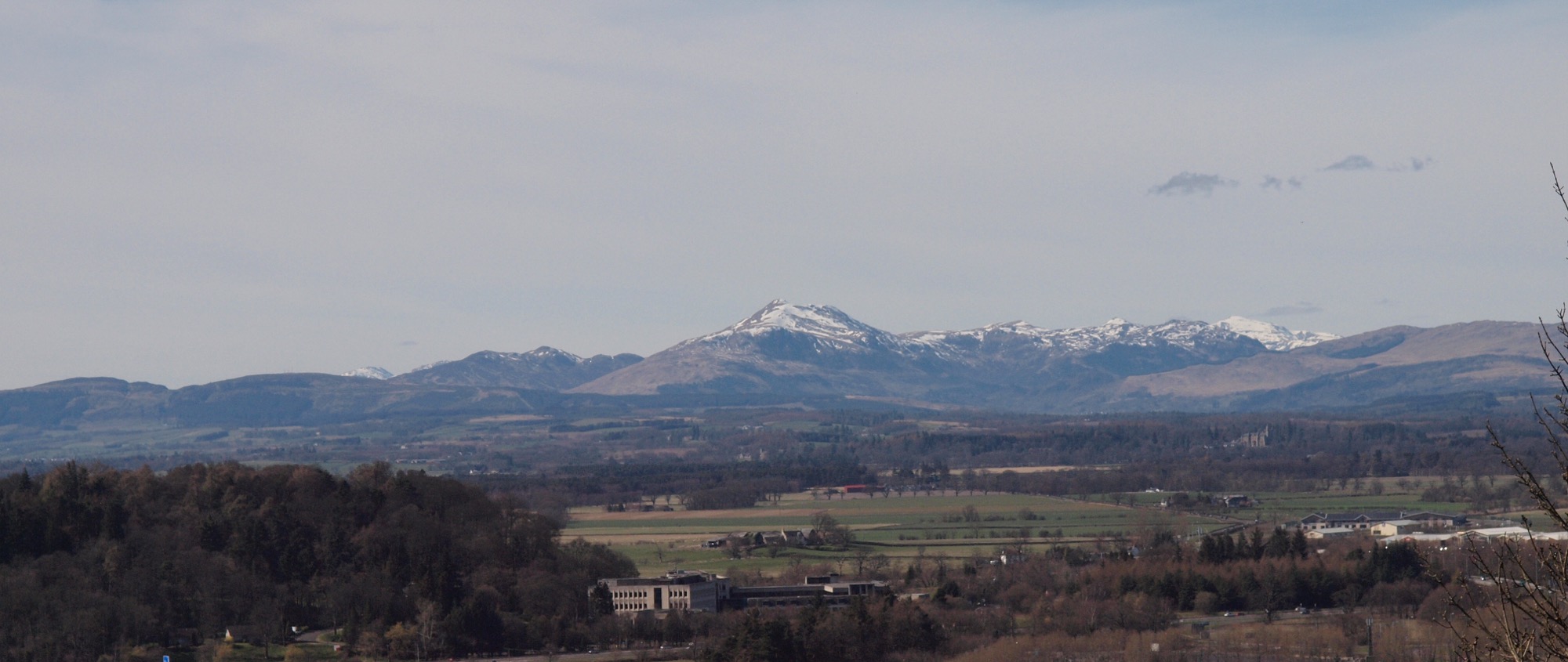
We stand next to cannons dated from 1810 which have been emasculated and painted in a beautiful uniform glossy black, and stare out at the hills and mountains rising around us. Snow capped and dressed in their winter colours, a reminder of the terrain which the Scots warriors used so skilfully to their advantage. And in which, the treachery of Glencoe, still leaves a winter chill.
 Salatheel