
When tourists go to a country they look for the spectacular, the noteworthy, the interesting. They congregate in the Cordobas and the Lake Districts of the world. They do not generally partake of the fields that form the agricultural breadbasket or the cities that provide the manufacturing jobs in a country.

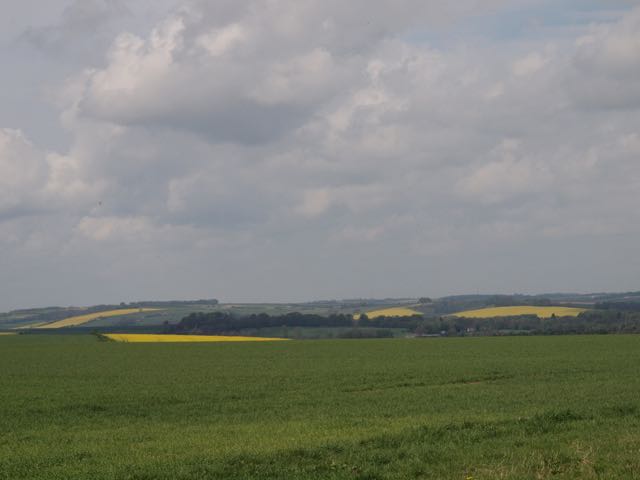
But I am visiting friends and family who live in the quiet of the rural heartland, where the land is carved into fields as far as the eye can see and the sky arcs overhead in its immensity. The rape is in bloom and it splats itself yellow and vibrant amongst the green fields of the young wheat.
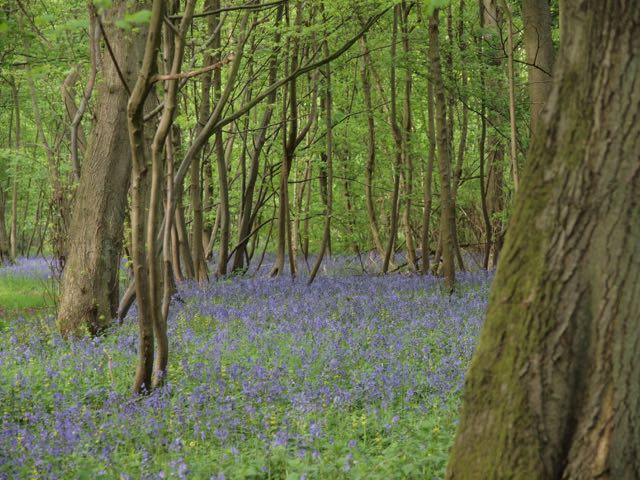
The trees have new leaves and they are a succulent yellow-green, vibrant and fresh. Whilst under the canopies in the woods, the bluebells mass.
As we drive along narrow roads, bordered by hawthorn hedges, neatly clipped and newly sprouting, I am struck by the fecundity of it all. Warm brick houses still sit in the landscape just as they were when John Constable depicted them in his idyllic scenes at the start of the nineteenth century. A pastoral heaven, a Garden of Eden.

I feel cocooned by nature in her abundance. Here it seems as if life is easy. The fruits of nature ripen and drop into your hand in “England’s green and pleasant land”. How different to the scenes further north, in the highlands of Scotland and the windswept Pennines, where nature does not condescend to notice you, or provide for you. You are permitted by her to scratch out a living where you can and no quarter is given in the battle to survive.
And perhaps you can see the effect of that indifference in the prevailing character of the people. They are tough, no nonsense, thick-skinned people, for whom a sense of humour is as important to survival as food on the table and warm clothes. They had strict rules of hospitality, and gave generously, because they knew that death was just a cold exposed night away and there but for the grace of God goes any one of them.

The Lincolnshire Fens and Norfolk Broads were drained by Dutch engineers in the early seventeenth century, and rich landowners have tilled the fertile soil and lived comfortably for some four hundred years. There is still an air of affluence in the neat gardens and the middle-class residents who spread from London to this gentle landscape, still commutable to the capital.
 Salatheel