
“I lost a world the other day…”

i lost a world

I remember… I remember… I remember an inn Miranda and a highwayman who came knocking at its door, under a new moon shining wi’ the twinkle, twinkle little stars that looked down on a land where the Jumblies sold sealing wax and cabbages and kings asked queens, who asked the little serving maid, not to go down to the end of the town for marmalade and a bier, which great lords will carry…

Oh where, oh where has my childhood gone? With its breathless words of verse and worse that tumble and fall in rhythmic joy, like a comb through the tangled curls of memory. Whose lines are as knotted as the memories that weave new poems about a childhood I imagine I lived; and perhaps I did. I will never know, for what is memory except imagination labelled real.

The Scissor-man went Snip! Snap! Snip! and daddy was gone. That most definitely happened, exactly like that. There is proof in artefacts, in death certificates and the gap where he should have been.

Or the glorious technicolour holidays which my sisters and I piece together in a tapestry of conflicting times and places and people and words. And somewhere, beyond the cracks, enough consensus lurks to say—I lived this. The ski-jump and the corsets, the oompah band, the crowded train and puppets on a string. When for me, earth had nothing to show more fair than Michelangelo’s David, or the Milky Way stripped naked by the desert air.

But what of the Sandman, trusted to care, who woke me to strange and terrifying games that played hide and seek in my memory for thirty-five years until, in fragmented snatches, they flashed back in technicolour cinemascope? What really happened to a terrified child, who left her body and thought she was dead and gone to Matthew, Mark, Luke and John, who had repeatedly failed to bless the bed that I lay on. Who is to know, now he is dead and gone and there can be no consensus to agree upon?

I so needed to be healed and meditation was the weight of pleasure that held me like a dream in a world of imagination lived real. A time when the inexplicable was inscribed on the soul as indelibly as a stylus scars wet clay.

And later, when somewhere between the heart and the need, God was elided by other lovers and became an apostrophe; did I simply imagine that I loved them and they loved me? Was that live-long minute true to me, all that heaven allowed? And when it altered, as it alteration found, did I forget with one what I remember with another, until the past has become a thing of chance?

And what of all those forgotten moments that have created me? Can leaps of faith and imagination span the gaps of my identity and make of me some fragmentary whole? Can other people’s words, in lines of poetry, fathom the unfathomable where past and future memories resonate in an eternal present? Or is it, that like all time, I am unredeemable?
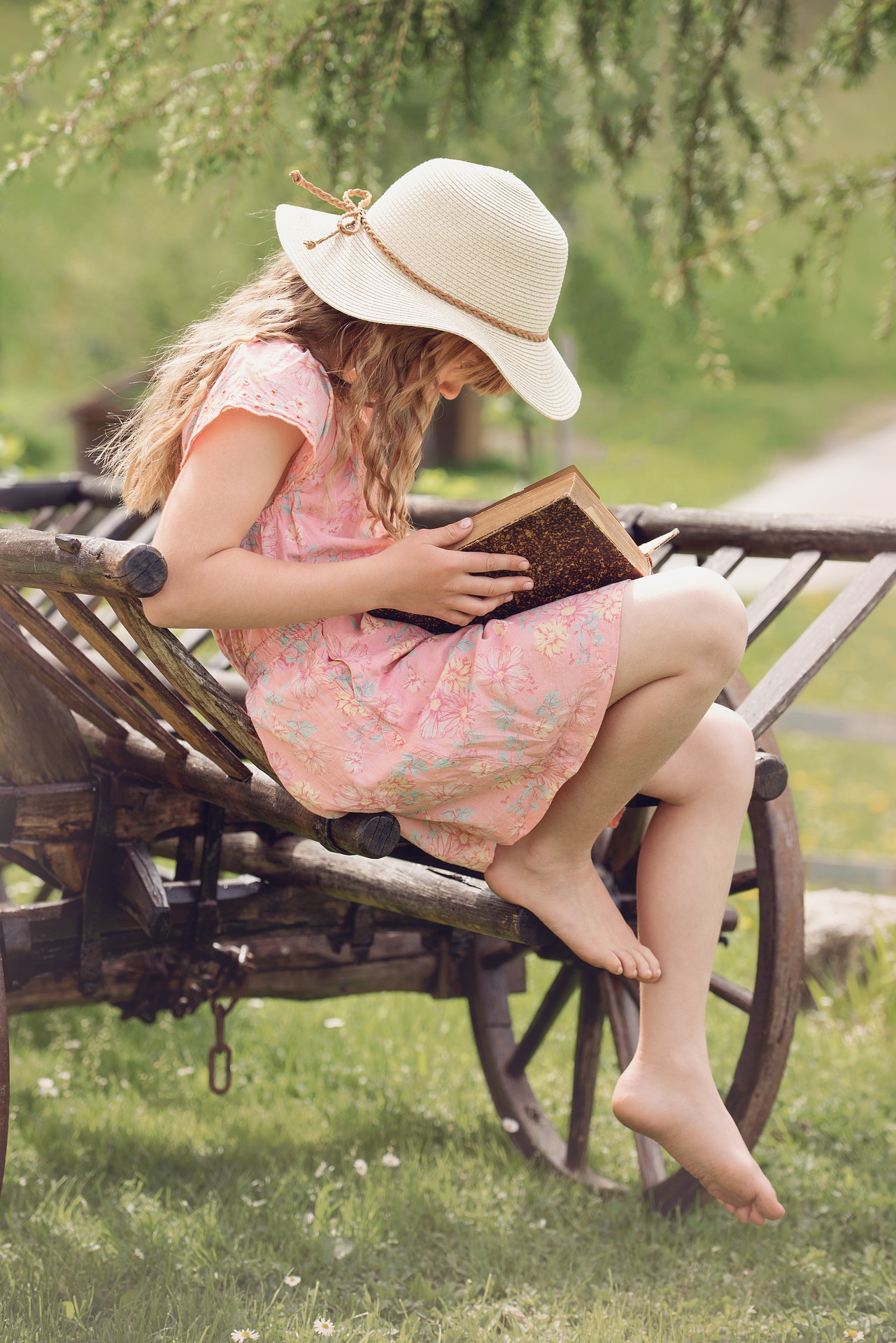
Image by Geralt on Pixabay

What makes a good read?

Good read pezibear 857021Isn’t that exactly what you want to know as you flick through titles on your phone, or run your finger along the spines of books on the library shelf. If it was just as simple as saying, abc. But it isn’t. And there are plenty of snobs out there who will tell you, that good books must be literary, so you can dismiss all other books. Just as there are passionate advocates of genre fiction that can drone on about chapter and verse and talk it up to the status of genius.
How many god-awful literary novels have I discarded on the “unbearable” pile? Yawn, yawn, another tedious serving of a university professor beset by middle-class angst, liberally dressed with irrelevant and embarrassing similes. Just as I have spurned robotic science fiction with robotic characters who have the emotional range of teaspoon (to quote from a good read).

I know what I think makes a good read, and it’s nothing to do with literary versus genre. A good book can come from anywhere, be about anything and written in any style. It is to do with the understanding and vision of the writer. A mediocre book is one where the reader understands at least 90% of it on the first reading. A second reading, if you ever do it, will definitely bore you and give you what remains of that final 10%.

A good read gives you about 75% on its first reading, but you will find it totally satisfying. If you decide to re-read it, you will be amazed at what you missed on the initial outing. You will realise that the inconspicuous sentences at the start of the book that you failed to digest the first time, ring like bells heralding later developments in the plot. You will see underlying threads that were not clear before. You will appreciate character arcs and see the steps by which they are achieved.

But a really good read gives you just 60% and leaves you thinking wow! The second reading ups you to 80% and you realise that you will get even more from a third reading and wonder if you will ever approach 100% understanding. Each time you read it you peel back the layers. You start to see the subtleties in the dialogue and the things that are left unsaid. You will notice the unresolved nature of the dilemmas; the imperfections of the characters; the wider questions that are raised. You will talk about it with friends and it will stay with you through the years, providing reflection and thought that sparks off in a 100 different ways.

Then there are the books that arrive at pivotal moments and change the course of your life…

Here are some of my really good reads in a variety of genres, because the only way to find them is through happenstance or recommendation. It’s a broad selection, and what worked for me may not work for you. Some of them I read many years ago, others more recently, but for one reason or another, they are all ringing in my memory.

  • Crime and Punishment – Foydor Dostoyevski (classic)
  • The Other Side of You – Sally Vickers (modern literary – English)
  • The Ghormenghast Trilogy – Mervyn Peake (fantasy)
  • Cat’s Eye – Margaret Atwood (modern literary- Canadian)
  • Any Science fiction by Ursula le Guin (self explanatory…)
  • A Fine Balance – Rohinton Mistry (recent history – Indian)
  • The Lymond Series – Dorothy Dunnett (historical)


Photo courtesy of Pezibear on Pixabay

Creativity emerging part 2—Baby talk

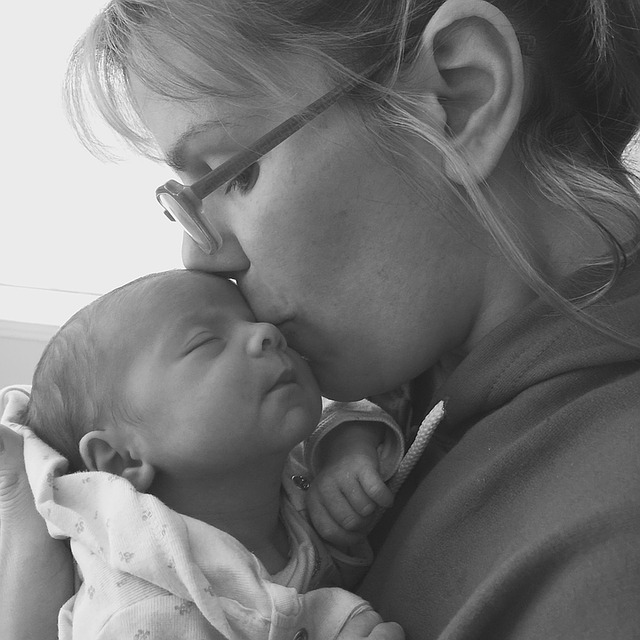
newborn and motherI have a memory—which is, after all, only imagination labelled real—of being less than six weeks old. It came to me many years ago in the cradling that is approaching sleep, when we let go the reins of the world and sink into the hidden spaces.

Awareness is a soft haze of colours. The darker blur in the centre gradually fills the space. An intensity of love swells, an answering joy radiates and melody suffuses it.

It was a world demarcated only by the the basic unconstrained senses; a world of undifferentiated awareness; a world that had no  defined meaning, where my mother leaned towards me and with a few loving words, reached to pick me up.

In my mind, the key to the experience was its undefined quality. It came from a space before language had carved up my existence into discrete chunks. Before language had determined for me that I can experience love, or, bitterness, but not both together, because there is no word for that in English. If I do experience it, I find it confusing because it has no label. So I probably describe it to myself as something that it isn’t, in order to provide an explanation and get my rational side involved. Then off I will go down a logical path based on a false premise and I will end up… who knows where.

In subtle and not-so-subtle ways language coerces us into a view of the world, both as individuals and more broadly, as cultures. But we kid ourselves if we think that words are precise things that we can define. Actually their meaning is completely individual and is predicated on our experience and understanding. We have created our world from shimmering building blocks that wobble to suit the requirements of the moment, and we do our best to shore them up into something dependable and solid.

In creativity, I am trying to exploit that inaccuracy. I seek the unpredictable in art. I want to see something from a new perspective, or to see something fresh in a known perspective. What attracts me as a writer is to uncover the unrealised in a situation. Through the exploration of a character, to realise and perhaps apply a different interpretation of the world, where the logical chain based on the false premise, has ended up in a very different place to my own. And in many ways, to do this, I need to return to the undifferentiated, undefined world of the baby and redefine it for myself in new ways.

Photo courtesy of jjbyrne on pixabay

https://pixabay.com/en/baby-love-mother-newborn-baby-mom-1474439/


Creativity emerging—part 1

NebulaDo you write longhand or on a computer? Or. Do you write in the morning or at night?
What is it that the questioner hopes to understand from these questions that I have heard a million times at writer’s festivals and author talks? I groan internally—in fact next time I think I’ll make it audible—at this waste of time when a writer could be talking about the inspiration for a character, or what they learned from writing the book, or… any of a thousand other more enlightening things.

The creative process holds a fascination for people whose passion is to fall into the creations of others. So they ask questions about what a creative person does—what process they go through. But it is not the process that makes you a creator, the process is the pedestrian enabler. What is important to me as a writer and musician is the connection with that part of myself that is constantly creating and expressing itself, if only I could keep myself out of the way.

There are times when I sit at the piano and in that moment there is no intervening instrument between who I am and the infinite space of the note that is expressing me. How does that happen?  When the mechanics of process cease to exist and I allow free access to the fluid eternity of myself.

However, that moment is only possible after hours of the mechanics of playing with stumbling fingers and a methodical brain working it all out—of process.

Music is not about notes any more than writing is about words. Being able to pick up a pencil or construct grammatically correct sentences using a keyboard is the necessary process that we can all engage in, it is the thing that will enable a deeper flow of self expression to emerge, but only if you open yourself up to allow it.

Just because we have all been taught how to string words together does not mean that we can write a book, any more than playing the scale of C minor would enable you to play a Beethoven Sonata. It took me nearly six years to write and edit my novel (my first and only so far). What I was doing was learning how to construct a story; how to develop a plot; how to reveal a character; how to write action; how to select the most effective word for a sentence and a hundred thousand other things I needed to learn (and still need to learn). And it was both a joy and a struggle. I was practicing my scales and arpeggios, working out my chord sequences so that eventually, possibly, maybe, if I’m lucky, one day there will be no pencil in my hand, no finger on the keyboard, only the experience of words arising from the infinite potential of meaning.

More on creativity, same time next week…

***

Also see Christian Mihai What I learned in 5 years of blogging.

Take time. Give time time to do it’s work.

I don’t consider myself to be naturally talented in any area of life, but I know with absolute certainty one thing: that if you put in the time and the effort, you can become at least somewhat good at anything; anything at all.


Image uploaded from https://au.pinterest.com/pin/423901383649780704 Owner unknown.

Dorothy Dunnett, a writer’s masterclass

Dorothy Dunnett

I have just finished another one of Dorothy Dunnett’s Lymond Chronicles. Do you read a book by her, or rather, eat it slowly, blindfolded, seeking to identify the ingredients that constitute its rich sauces? Each and every page there is cause to pause, to peel back the deceptive words for the hidden nuances that lie beneath, which reveal the roiling depths of her layered characters.

If Jane Austen did not “… write for such dull elves as have not a great deal of ingenuity themselves”, then Dunnett positively demands only the brightest of the elfin kingdom. I frequently wonder when I am reading her, whether I have the qualifications. Using language that shimmers and entices in a way that only the Celts know how, she categorically refuses to explain herself, except perhaps 200 pages later, when you have finally stumbled into an understanding such that you no longer need it.

Her point-of-view is stratospheric, never delving into the depths of her hero’s convoluted motives from the inside, but hiding them in every phrase for the reader to fossick through as best they can. It is, in my opinion, both her genius and her weakness. For on first reading I defy anyone, however erudite and perspicacious, to catch her cryptic meaning at the speed with which we now expect to devour literature. It is a slow and laboursome journey of reading and sometimes re-reading which most I suspect, quite understandably, are simply not prepared to embark on. It demands not just your attention, but your life experience of that-which-is-left-unsaid, to absorb the abundant sustenance available in the dialogue. But if you do stay with her through the Latin and the French and the Gaelic and the cryptic allusions so historically accurate for the age, then the rewards are legion, as her fans will tell you.

It is not as though I think her without fault. There are times when my mental blue pencil appears in my hand and strikes through the excessive script which leaks tension like a sponge. Or I frown at the occasional clumsy plot construction, or the superhuman qualities and contradictions of her impossibly youthful hero, Lymond. But these are minor things compared to the breathtaking impact of the first introduction to Lymond’s cruel streak, in the incident of the burning helmet; or the description of the glittering French Court hunting; or the exquisite, restrained finesse with which she writes about that most difficult of subjects – sex. Dorothy Dunnett is unequivocally a writer’s masterclass.

So here I am, with pretensions to call myself a writer. My first novel is now completed and mentally laid aside and I am contemplating my next one. What shall I take from this Mistress of the historical adventure/thriller, the genre in which I seek to play? Not anything literal, that is for sure. You do not ape a Dorothy Dunnett and expect anything but derision; your own being first in line. No, I have taken two things: less is undeniably more and also, to understand what it is that you are good at and to excel in it. Then, your inescapable shortcomings will be readily forgiven.

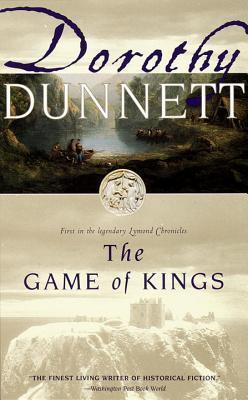
Dorothy Dunnett, The Lymond Chronicles. There are 6 books in the series.

Book 1, The Game of Kings

Cover image courtesy of Amazon.

Killing my darlings

The thing about pruning is that the tree loves it.

Photo courtesy of Ulleo on Pixabay

olive-tree-1756611_640Cutting away all that dead wood, snipping off the excess leaves and twigs that were so necessary at the time, just in case some disaster happened. Paring it back until the whole majestic structure makes sense. The structure becomes the beauty on which the leaves and fruit are given space to breathe and be seen in all their glory. A gardener cannot afford to be sentimental. Rip it out, chop it back, clear the space…

Yep, I’m editing.

I have an awful lot of words—a superfluity of them. Each one carefully crafted, mused over, lovingly cherished and laid down in long strings. My darlings! Do I really have to kill you?

Oh the joy of gardening. I find that I am an unsentimental editor.

A whole chapter in existence for just one small thing? Really? I have grown a complete branch laden with twigs and leaves that has only one small olive on it.

Chop!

A character looks at another character. Well, what else are they going to do?

Chop!

She… She… She… consecutive sentences clanging like a bell.

Chop!

Hmm one sentence in the right place, saves fifty later on.

Chop!

Oh for heaven’s sake, get to the point.

Chop!

I am in love with my pruning saw. It is merciless. Then suddenly it gets to the quick and I jump back. Over twenty per cent of the manuscript lies in cuttings around my feet. (It is a very long novel.) Have I just got a bit too carried away? Better get someone else to read it for me.